

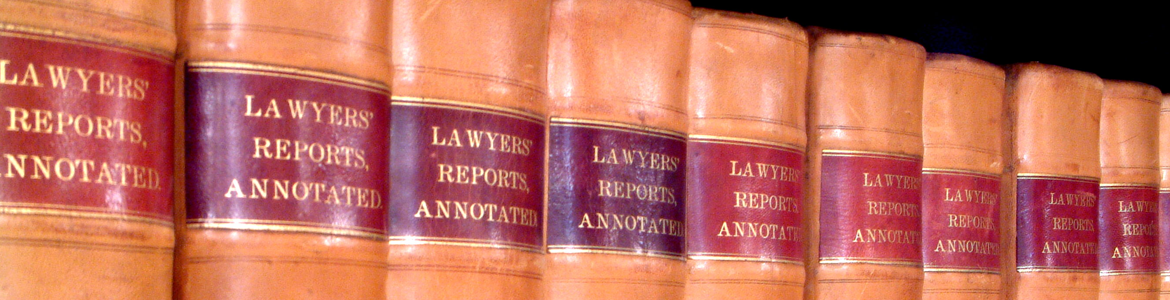
Civil and Criminal Charges
In court proceedings, there are criminal charges and civil charges.
Both charges can have very severe consequences. However, the main difference between the two is that a civil case generally results in financial penalties, whereas a criminal case can send you to jail.
The most famous cases that show the difference between civil and criminal cases were the two OJ Simpson trials involving the murder of Nicole Simpson and Ronald Goldman.
OJ Simpson won his criminal trial against the State of California and consequently wasn’t remanded to prison for the rest of his life.
OJ, however, didn’t prevail in the civil wrongful death suit brought against him by the relatives of his alleged victims. That loss didn’t send him to jail but required him to pay a $33.5 million penalty.
If you are facing a criminal charge in Massachusetts, you need an experienced Massachusetts criminal lawyer, like Elliot Savitz, with a proven track record by your side.
You have much too much at stake not to give him a call. Inadequate or inexperienced representation may result in jail, fines, loss of employment, driver’s license, welfare benefits, or even deportation, if you are not a U.S. citizen.
Elliot Savitz is a well-respected Massachusetts criminal lawyer, who understands your rights, knows his way around the courts, and can assure you of your best chance to stay out of jail, avoid costly fines, and win your case. So pick up your phone and call Elliot Savitz now. Within minutes, he will assess your case and help you to develop a winning game plan. Sleep well tonight knowing you have Elliot Savitz on your side.
Who am I?
I am a graduate of M.I.T. and B.U. Law School and specialize in criminal law. I am highly respected throughout the legal community and been honored as Bar Advocate of the Year.
I have the experience and know-how to develop a winning strategy and assure you the best result possible. Within minutes, I can assess your situation, describe your upcoming judicial proceedings, give you legal advice, explain your legal options and the likely outcome of your case. I know what the prosecution is looking for, and after years of in-court experience, I have learned to poke holes in their strategy and protect the rights of my clients. If you do not understand all the details of your case, or even why you’re being charged, you need an experienced Massachusetts criminal lawyer, like myself, who will relentlessly fight for you. So, pick up the phone, right now, and call Elliot Savitz at (781) 613-2858 for a free consultation.
What can I do for you?
Speaking to me about your case can change your outlook dramatically. Within minutes, you will feel more at ease knowing what to expect in court, the likely outcome of your case, and alternative strategies. For instance, if you were charged with larceny or shoplifting, did you know you might have been searched illegally? If so, all the evidence may be excluded in court, resulting in a swift dismissal. Or, during your arrest, were you being questioned in violation of your constitutional rights? If so, any statements or admissions made during your interrogation could be excluded at trial, resulting in a not guilty. Both of these results can be produced through timely motions to suppress and are just two examples of how a competent criminal defense attorney can protect your rights in court.
As a knowledgeable Massachusetts criminal lawyer, I know what to look for in cases, like yours, and how to formulate a strategy to win your case and let you move on with your life. So pick up the phone right now and call me at (781) 974-3429 for your free consultation.
What should you do now?
Call me, Attorney Elliot Savitz, immediately at (781) 974-3429 for a free consultation. I’m quick and aggressive. Within minutes, I will evaluate your case and begin to develop a winning strategy. I know how difficult it can be to face the criminal justice system alone. With me by your side, you will always have someone to turn to with your questions or concerns, and I promise you that I won’t let up until we get through this together.
TESTIMONIALS
“I cannot begin to tell you how much I’ve appreciated your most sincere guidance & support. This has been one of the most difficult years we’ve been through with our son. We could not have hoped for a more positive outcome.”
“I really wanted to thank you so much. I cannot thank you enough. You were always there to fulfill whatever was required by the court.”
“Dear Elliot, Just a short note filled with heartfelt thanks for your help and support in my defense during my court appearance. I can’t begin to express how grateful I am knowing this foolish incident and its aftermath is finally over. Thank again, so very much.”
“Dear Elliot, People are not immune to the ‘fortune’ in their life. The bright side is that someone is out there to save them. You are the person saving my fate. You represent ‘integrity and justice.’ You are the best lawyer on earth.”
“We were absolutely astonished and very grateful for how Elliot handled our son’s case and would highly recommend him to anyone who is in need of legal council!”
“Dear Mr Savitz, Thank you so much for all your hard work, as well as your persistence on my case. I really appreciate your sensitivity in dealing with me on this matter. I feel good about the outcome of my case and am grateful to you for resolving it quickly.”
“I’m sitting here thinking about what a remarkable victory you pulled off. I just had to let you know that it was an outstanding victory. Well done.”
“I wanted to thank you again. I’m at the end of my probation period. I could not have done it without you. You were such a great support. I just want to let you know I appreciated everything you did.”
“Thank you for representing me in court. Everything worked out for the better. I have been attending all my AA meetings, consulting at Catholic Charities and meeting with my probation officer. I haven’t had a drink since the day I went to court and everything is great at home.”
CONTACT US
CRIMINAL CHARGES
ADDITIONAL LEGAL SERVICES
THERE IS NO CHARGE FOR YOUR INITIAL CONSULTATION.
Call (781) 974-3429 & Take the 1st Step to Developing a Winning Strategy.

If you are facing criminal charges, call The Law Offices of Elliot Savitz & Scott Bradley, at (781) 974-3429.
We are available 24/7 and can assess your criminal charges over the phone to quickly determine your best course of action. Then, our law office will represent you in court as we fight together against your charges.
ATTORNEY CLIENT PRIVILEGE protects your conversation, so you can be open and honest with Attorneys Savitz & Bradley whatever the charge or charges. We are genuinely committed to protecting your rights and will always act in your best interest.



 English
  Russian
  Turkish
  Spanish
  Persian
  French (Canada)
  French (France)
  German
  Japanese
  Vietnamese
  Chinese
  Portuguese
  Italian
  Khmer
Khmer